
2025 in Review: Where Manufacturing Gained Focus—and What Comes Next

In 2025, manufacturing operated with less slack than ever before. Demand stayed high, complexity increased, and the cost of making the wrong decisions became harder to absorb.
Across industries—from work trucks to enclosures, from HVAC to harsh-environment equipment—teams across the board felt that pressure in similar ways. Individual products carry more responsibility, while product systems had to respond to increased demands with less room for failure. Decisions that once lived in isolation began to compound across engineering, operations, service, and in the field.
As a result, attention shifted back to fundamentals—not as theory, but as a necessity. How products are built. How they scale. How do they get serviced. How they perform over time, not just at launch.
What follows reflects the themes that kept resurfacing in conversations with builders, engineers, and operators throughout the year. Together, they point to a broader shift: manufacturing is moving away from optimizing individual parts and toward optimizing how entire systems behave under real-world conditions.
|
Manufacturing is Still About People—But the Pressure Has Intensified At the center of every product is a team of people making decisions under real constraints. Engineers balance performance and cost. Operations leaders manage throughput. Product teams plan for growth while trying to avoid unnecessary complexity. In 2025, the importance of these roles stayed the same, while pressure surrounding them did not. Timelines tightened. Teams stayed lean. Expectations rose. |
 |
As a result, success became less about heroic problem-solving late in the process and more about making sound decisions early. The manufacturers who performed best weren’t working harder; they were designing systems that reduced friction, prevented downstream issues, and made it easier for teams to do their jobs well.
Access Shifted from a Hardware Choice to a Design Responsibility
One of the clearest patterns in 2025 was a shift in how access was viewed.
Not as a part number.
Not as an afterthought.
But as an integrated element of product design.
Across the work truck industry, enclosures, utility boxes, HVAC equipment, and electronic systems, access became tied to larger questions. How will this product be serviced over time? How does it perform across its full lifecycle? Where does risk actually surface—in the field, during maintenance, or as production scales?
In 2025, access became a practical lever for reliability, safety, security, and long-term performance.
Scaling Exposed Weaknesses in Design
Growth remained a priority across markets, but 2025 exposed how unforgiving scale can be when fundamentals aren’t sound. As volumes increased, decisions that once felt isolated began interacting in unexpected ways.
Component variations multiplied complexity. Custom work that once differentiated from a product became harder to support, harder to service, and harder to reproduce consistently. Small compromises made to move faster early on showed up later as quality drift, longer lead times, and increased strain on engineering and operations teams.
The manufacturers who scaled successfully approached growth differently. Instead of chasing output alone, they focused on reducing variability and clarifying how products were meant to be built, serviced, and supported. Standardization wasn’t about sameness— it was about creating clear, repeatable structures that could absorb growth without breaking.
The Work Truck Continued Its Shift from Platform to System
Few segments illustrated this evolution more clearly than the work truck market.
Smarter vehicles, modular bodies, electrification, and fleet-level expectations pushed body builders and upfitters to rethink longstanding assumptions. The truck is no longer a static platform; it’s a system with interconnected requirements.
The shift from static to dynamic elevated the importance of design decisions that once felt minor. Component choices now influence serviceability, safety, and adaptability over the life of the vehicle.
Harsh Environments Left Little Room for Error
Across applications that are vulnerable to vibration, corrosion, extreme temperatures, and washdown conditions, 2025 exposed how thin the margin for error has become. Equipment is expected to operate longer, with fewer interruptions, in environments that accelerate wear and failure.
Downtime now carries consequences beyond lost productivity. Field repairs disrupt customer operations, place additional strain on service teams, and reveal design decisions that were not intended for reconsideration. Failures that once felt manageable now ripple outward—affecting safety, compliance, and customer trust.
As a result, durability shifted from a checkbox to a credibility test. Meeting a specification was no longer enough. Products were expected to perform predictably over time, under real operating conditions, and without requiring constant intervention.
Trust Emerged as an Engineering Outcome
Trust was a consistent focus in 2025, especially in applications where safety, security, and compliance were paramount.
Customers increasingly expected products that behaved predictably, protected assets, and signaled quality through use—not explanation. That trust was built through design discipline, material choices, and attention to how systems behaved over time. That trust was the result of deliberate design choices made long before a product ever reached the field.
From Components to Architecture
One pattern consistently surfaced over the course of the year, regardless of industry or application.
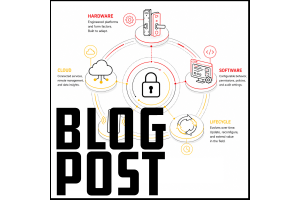
Manufacturers are moving away from isolated component decisions and toward system-level thinking. The conversation shifted from simply asking what fit in a given space to examining how each choice influenced assembly, serviceability, reliability, and future change.
That mindset reshaped how products were designed, built, and evaluated throughout 2025. In many cases, it surfaced only after teams encountered scale, service, or integration challenges—but once recognized, it began to influence decisions earlier in the design process.
 |
Looking Ahead
What 2025 ultimately reinforced is that progress in manufacturing rarely arrives all at once. Progress shows up through accumulated decisions, many of them unglamorous and either compound over time or create drag.
Complexity has a way of hiding until volume increases. Risk often appears far from where the original decision was made. And trust, once lost, is difficult to recover. These realities shaped how products were evaluated and how design conversations evolved this year.
As industries move forward, the advantage will belong to teams that stay disciplined about the fundamentals. Optimizing teams that approach access, durability, and system architecture as deliberate design decisions, informed by how products will be used, serviced, and evolve over time. By 2026, this lifecycle-first mindset will be the norm, as manufacturers prioritize integration, serviceability, and long-term performance over reactive fixes.