
AHR 2026: Smart Fusion and the Role of Access in the Next Generation of HVAC

Why access design is becoming a critical lever for performance, scalability, and reliability in modern HVAC systems
The HVAC industry rarely changes all at once. Instead, it evolves gradually under steady pressure. Through new regulations, advances in technology, and rising customer expectations. Over time, those small shifts add up, forcing a shift in the way systems are designed, built, and supported, especially when compared to years prior. That is where the HVAC industry stands heading into AHR 2026.
HVAC manufacturers are operating in an environment shaped by far more than airflow and temperature control. Digital infrastructure, rising energy density, tighter service expectations, and the need to scale production quickly have all become core design pressures. For manufacturers serving the data center market in particular, these forces are no longer emerging trends—they are daily constraints.
What matters most is the way these technical and operational demands converge inside modern HVAC systems. These demands reshape how equipment is designed, built, and supported, thus elevating the importance of decisions that were once considered secondary.
Allegis’s presence at AHR 2026 is rooted in this shift, where decisions around something as fundamental as a door, latch, or seal can directly influence airflow control, service time, and system efficiency. As HVAC systems grow more complex and more critical to the environments they support, access hardware has taken on a much more consequential role. Doors, latches, hinges, seals, and insulation are no longer peripheral decisions, but now primary decisions. They directly affect system performance, serviceability, energy efficiency, and speed to market. At Booth SL1239, Allegis will be focused on helping manufacturers design access solutions that are aligned with where HVAC is headed next.
Data Centers Are Accelerating Design Expectations
Few segments have reshaped HVAC design expectations as quickly as data centers, where cooling performance is now inseparable from uptime, efficiency, and long-term operational risk. The growth of AI workloads, cloud computing, and digital services has driven unprecedented demand for cooling capacity, particularly in high-density environments where uptime and efficiency are non-negotiable.
For HVAC manufacturers, this has meant a rapid expansion into specialized cooling equipment such as CRAH (Computer Room Air Handler) systems. Some OEMs are entering this space for the first time, while others are scaling existing platforms to meet aggressive demand forecasts. In both cases, the technical and operational requirements are more stringent than those found in traditional HVAC applications.
 |
Cooling performance must be consistent and predictable across operating conditions. Air leakage and pressure loss are unacceptable. Maintenance access must be safe, repeatable, and fast. Systems must withstand continuous operation in controlled environments where small inefficiencies compound over time. And all of this must be delivered on compressed timelines as data center operators push projects forward at speed. These pressures have pushed many manufacturers to reconsider aspects of their designs that were once taken for granted. Access points are one of them. |
Access Design Has Become a System-Level Decision
In insulated and pressurized HVAC systems, access hardware shapes how a unit performs over its entire lifecycle. Poorly designed access can compromise sealing, introduce air leaks, increase energy consumption, and complicate service procedures. In data center environments, those risks are amplified.
At Allegis, access hardware is treated as an integral part of the overall HVAC design, rather than a collection of standalone components. Latches, hinges, gaskets, and insulation must work together to maintain pressure integrity while still allowing technicians to safely and efficiently access equipment. When these elements are designed in isolation, performance inconsistencies and manufacturing challenges often follow.
This systems-level view is central to how Allegis works with HVAC manufacturers, particularly those developing or scaling equipment for data centers. The goal is not to add complexity, but to simply create access solutions that are repeatable, configurable, and aligned with real-world operating conditions.
The simplified approach comes to life in the solutions Allegis is bringing to AHR 2026. From access systems designed for insulated, pressurized enclosures to materials that support thermal efficiency and durability, these offerings demonstrate how access design, sealing, and insulation must work in tandem in modern HVAC applications.
Klima-Flex 3: Designed for Insulated, Pressurized HVAC Applications
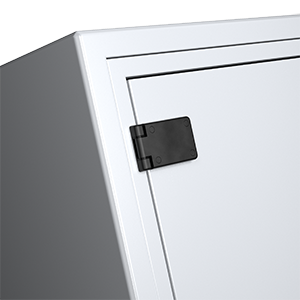
When insulated, pressurized enclosures demand consistent sealing without complicating service access. One of the key solutions Allegis will be showcasing at AHR 2026 is the Klima-Flex® 3 series, the most flexible and adaptable Klima-Flex family developed specifically for HVAC applications.
Klima-Flex 3 was engineered to address the realities of insulated and pressurized doors and cabinets, where consistent sealing and reliable access must coexist. The system includes the components necessary to deliver a complete access solution, allowing manufacturers to move away from piecemeal selection and toward a more unified design approach.
 |
 |
 |
Compression latching within the series applies uniform force across gasket surfaces, supporting long-term sealing performance. Hinges are engineered to accommodate the weight and construction of insulated doors without compromising alignment or durability. The system as a whole is adaptable across different cabinet sizes, door configurations, and service requirements, making it well-suited for platforms that need to scale or evolve.
For manufacturers producing CRAH units or other data center-focused HVAC equipment, this flexibility reduces the need for constant redesign as specifications change or volumes increase. It also supports more consistent manufacturing outcomes by standardizing access architecture across product lines.
Advancing Thermal Performance Through Better Insulation
Access Hardware does not exist in isolation from the materials surrounding it, particularly in insulated, pressurized HVAC enclosures where access, sealing, and thermal performance intersect. As HVAC systems become more energy-intensive, particularly in data center environments, insulation performance has become a critical factor in overall system efficiency and durability.
At the 2026 AHR Expo, Allegis will also be introducing a new thermal insulation range, developed in response to rising energy density, tighter efficiency targets, and the increasing thermal demands of data center and industrial HVAC systems designed for HVAC, industrial, and construction applications where performance margins are tight. This range delivers industry-leading thermal conductivity along with exceptional vapor barrier properties, helping reduce energy loss and manage condensation risk in demanding environments.
When insulation is properly integrated with access design—aligned with door construction, sealing strategies, and service access—it becomes part of a cohesive performance system. This integration supports not only efficiency goals, but also long-term reliability and safety, particularly in continuous-duty applications.
Speed to Market Depends on More Than Design
In the data center market, the ability to move quickly from design to production is now often just as important as technical performance. OEMs face intense pressure to deliver systems on accelerated timelines, and even small disruptions can ripple through project schedules.
Availability of components plays a significant role in this equation—for example, when a production line is ready to build but a missing latch or gasket forces a delay, even a well-designed system can become a bottleneck. Access hardware that is well designed but difficult to source, inconsistent in lead times, or challenging to manage across programs can create unnecessary friction in manufacturing and supply chains.
Allegis addresses this challenge through deep supplier partnerships, customer-specific supply chain service programs, and a wide stocked product range. The objective is to support manufacturers not only with engineering expertise, but with the operational reliability required to keep production moving. In fast-growing markets, availability becomes a strategic advantage rather than a background consideration.
Conversations That Start with the Application
AHR is an opportunity to see new technologies, but it is also a place where practical design and manufacturing challenges surface. At Booth SL1239, Allegis will be focused on conversations that begin with the application itself—how a system is built, how it operates, how it is serviced, and how it needs to scale.
Whether a manufacturer is entering the data center market, expanding CRAH production, or refining an existing HVAC platform, access design plays a role in the outcome. Allegis’ team will be on hand to discuss how access hardware, sealing, and insulation can be aligned with performance goals, manufacturing realities, and long-term reliability requirements.
As HVAC systems evolve to meet higher performance demands, tighter operating tolerances, and faster production timelines, access is no longer just a point of entry. It is a point of design leverage.
Visit Allegis at the 2026 AHR EXPO, Booth SL1239, to discuss your specific access hardware needs and explore how smarter access design can support the next generation of HVAC systems.