
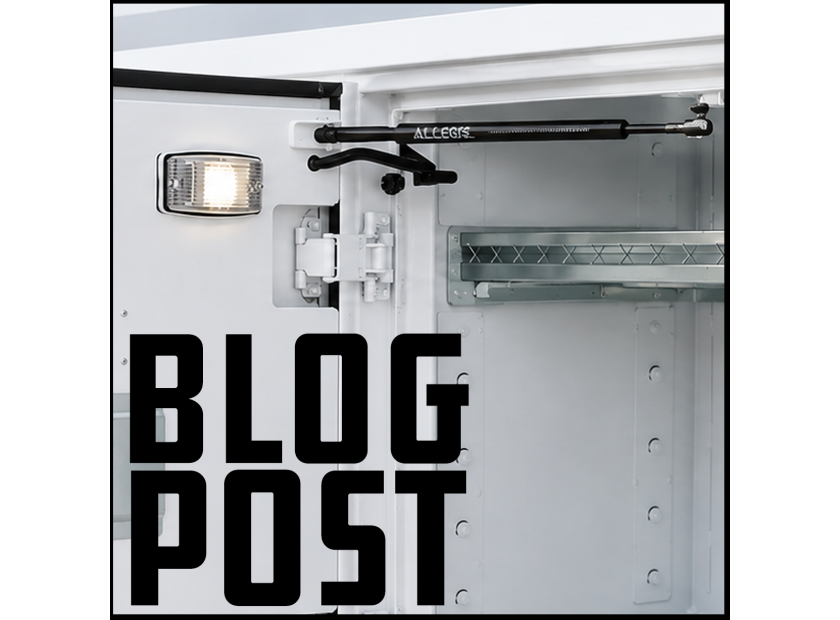
Selecting the right gas strut involves more than choosing a force rating. Proper sizing requires evaluating panel weight, hinge placement, mounting geometry, stroke length, and environmental conditions to ensure smooth, controlled operation. Learn how gas struts work, avoid common selection mistakes, and identify the key factors that improve performance, safety, and long-term reliability.
General
-
 Posted: October 05, 2026Categories: General
-
 Posted: August 24, 2026Categories: General
-
 Posted: August 20, 2026Categories: General
-
 Posted: August 13, 2026Categories: General
-
 Posted: July 13, 2026Categories: General
-
 Posted: June 03, 2026Categories: GeneralRead More
Most insulation materials are designed around day-one performance. Thermobreak® is engineered for the years that follow, delivering long-term thermal efficiency, acoustic control, and vapor resistance that help reduce performance loss over time. Discover how Thermobreak is changing the way engineers approach insulation specifications.
-
 Posted: April 17, 2026Categories: GeneralRead More
Inside every emergency vehicle, there’s more happening than meets the eye. Beyond the lights, equipment, and urgency, a hidden system is working to control heat, noise, and air quality—shaping performance and safety in critical moments. It’s an overlooked piece of engineering that’s becoming essential to how modern emergency vehicles are built.
-
 Posted: April 06, 2026Categories: General
-
 Posted: March 09, 2026Categories: General
-
 Posted: January 19, 2026Categories: GeneralRead More
As HVAC systems evolve under increasing regulatory, performance, and scalability pressures, design decisions that once seemed minor now carry significant weight. In insulated, pressurized, and data center–driven applications, access design directly affects airflow integrity, service efficiency, energy performance, and reliability. Heading into AHR 2026, access is no longer a secondary consideration—it’s a critical lever in modern HVAC system design.

Recent Posts