
CONEXPO 2026: The Shift from Machines to Systems and the Future of Construction
From Iron to Intelligence:
Understanding the Industry Shift
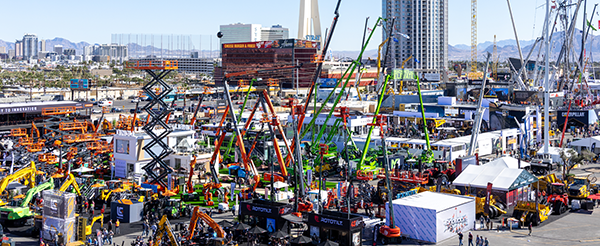
At CONEXPO 2026, the industry's scale remained unchanged, but the focus of discussion had shifted. Equipment is still central, but the conversation now centers on how machines function within larger systems—integrating technology, labor, and data rather than just meeting spec sheets.
No single breakthrough prevailed, but multiple forces are reshaping equipment design and field performance. Intelligence, connectivity, and new constraints are redefining what the industry requires on the jobsite.
This shift changes how performance is defined. Power, capacity, and cycle time still matter, but integration with digital workflows, system protection, and operator support are now core metrics. Equipment outcomes increasingly depend on how well each subsystem works together in actual job-site conditions.
The Forces Shaping Equipment and Jobsite Performance
AI Moves into Everyday Workflows
AI is now embedded in daily workflows, especially in preconstruction and planning. Estimating, takeoff, and scheduling tools are using AI to speed up decisions and reduce variability. Manual, experience-driven processes are being replaced by data-driven cycles with faster feedback.
On the equipment side, AI is showing up less as a standalone feature and more as an embedded capability. Operator assistance, predictive insights, and machine optimization are being integrated directly into the equipment experience. This changes how value is delivered. Instead of selling discrete technology features, OEMs are embedding intelligence into the core functions of their machines. For product leaders, this creates pressure to think beyond mechanical performance and consider how software and data enhance usability, consistency, and outcomes.
Electrification Becomes a Core Design Strategy
Electrification is no longer confined to demonstration units or isolated pilot programs. At CONEXPO 2026, it was clear that OEMs are building out broader portfolios that include electric variants across multiple machine classes. The conversation has shifted from feasibility to implementation, with increasing attention on how electrification fits into real-world operating environments.
This transition adds design complexity. Batteries, thermal management, and environmental protection are now central. Components once exposed to predictable conditions are now in close proximity sensitive electronics that require greater protection. For OEMs, electrification impacts enclosure design, sealing, material selection, and serviceability.
Automation Reshapes How Work Gets Done
Automation advances, but its role is defined by workforce realities. The industry is not moving toward fully autonomous jobsites soon. Instead, systems extend operator capability, reduce skill barriers, and boost repeatability. Semi-autonomous features and assisted operation are gaining traction by delivering immediate value without overhauling existing work.
This has direct implications for how machines are designed and used. Equipment must be more intuitive, predictable, and easier to operate within varying experience levels. Interfaces, controls, and access points all affect whether automation delivers value. Key takeaway: usability and adoption, not just ability, now drive product design success.
Workforce Constraints Shape Product Decisions
Workforce constraints—labor shortages, training gaps, retention—are now major factors in shaping equipment specs and technology priorities. Decisions previously based on performance alone now also consider operator support in real conditions.
This drives greater focus on ergonomics, safety, and ease of use. Reducing fatigue, simplifying tasks, and ensuring predictable interactions are essential. For OEMs, these priorities are vital for deploying and maintaining equipment with a limited workforce. Machines aligned with real operator workflows to perform better.
The Connected Jobsite Takes Hold
Jobsite connectivity is expanding, linking equipment, workflows, and decisions into integrated systems. Machine data now feeds management tools, giving contractors a complete view of performance, utilization, and cost for better decisions.
For OEMs, these priorities are vital for deploying and maintaining equipment with a limited workforce. Reliability now encompasses machine operation, data delivery, and connected workflow support.
 |
What the Show Floor Made Clear
Progress Is Driven by Incremental Improvement
While the industry conversation revolves around transformation, the show floor illustrated incremental progress. OEMs are refining performance, efficiency, and usability on existing platforms. These steady changes ultimately drive adoption.
Contractors adopt what delivers: uptime, predictable performance, and measurable cost benefits. Innovation matters only if it produces a reliable ROI in real conditions.
Technology Is Built In, Not Bolted On
The show emphasized integrated technology. AI, automation, and connectivity are now part of machines’ core design, shaping how they operate from the ground up.
This requires a new product development approach. Systems should be designed for integration, so mechanical, electrical, and digital components work together. OEMs must shift from component-level to system-level thinking.
Adoption Is Grounded in ROI
Contractors and operators consistently ground decisions in ROI. New technology is evaluated on its ability to reduce downtime, improve productivity, and lower the total cost of ownership. Only solutions with clear, repeatable values are adopted.
For product teams, this means innovation must align with real-world outcomes. Features need to deliver measurable, trusted benefits over time.
Where Performance Is Actually Won
Beneath the visible advancements in power, automation, and connectivity lies another layer of performance that is becoming increasingly important. As machines incorporate more sensitive electronics, more complex systems, and more demanding operating conditions, the ability to protect and maintain those systems becomes a defining factor in overall performance.
Environmental sealing, structural integrity, and access are no longer secondary. They are vital for equipment to perform as intended over time. Dust, water, vibration, and repeated use create stress that can compromise performance if not addressed.
Systems thinking is becoming more tangible. Machine performance depends not just on primary functions but on interfaces, enclosures, and access points supporting the system. Careful engineering of these elements leads to greater reliability and performance in the field.
What This Means for OEMs and the Supply Chain
Design Complexity Continues to Increase
Electrification, automation, and connectivity add complexity to equipment design. Previously, straightforward systems now require coordination across mechanical, electronics, software, and materials teams.
This requires a more integrated development approach. Choices in one area impact the entire system, so team alignment is more essential than ever.
Reliability Becomes a System-Level Requirement
As equipment becomes more connected and central, the cost of downtime rises. Reliability means not just keeping machines operational, but also maintaining protection, delivering consistent data, and supporting the broader connected systems they are a part of.
This highlights that interfaces, enclosures, and access systems—often overlooked—are now critical to performance. Failures in these areas can disrupt both machines and their connected workflows. The key takeaway: focusing on these elements is essential to maintaining system reliability.
Balancing Standardization and Customization
OEMs balance scalable platforms with diverse customer needs. Standardization builds efficiency; customization meets specific job requirements. The takeaway is clear: success depends on applying means using both approaches to address real applications.
Managing this balance requires flexible design approaches and strong collaboration across the supply chain. Partners that can support both modularity and customization will play an increasingly important role in enabling OEMs to meet these competing demands.
What Comes Next for the Industry
Looking ahead, the industry's direction is becoming clearer. The convergence of hardware, software, and data will continue to shape how equipment is designed and how value is delivered. Machines will become more capable, more connected, and more integrated into the broader systems that define modern construction.
This evolution will place greater emphasis on uptime, lifecycle value, and consistent performance across a range of operating conditions. As new technologies are adopted, maintaining reliability at every level of the system will remain a defining factor in long-term success.
The next phase of progress will not be driven by any single advancement. It will be shaped by how effectively the industry brings together multiple layers of innovation into cohesive, reliable systems that perform in the field.
Locking in the Future of Performance
CONEXPO 2026 reinforced a clear direction for the industry. Equipment continues to evolve, but the definition of performance is expanding. Power and capability remain essential, yet they are increasingly supported by systems that protect, connect, and enable consistent operation.
For OEMs and product leaders, this creates an opportunity to rethink how performance is designed into equipment from the start. Every interface, enclosure, and access point contributes to the outcome delivered in the field.
As the industry continues to move forward, the companies that succeed will be those that recognize performance as a system-level outcome. When every component is aligned to support durability, usability, and protection, equipment is better positioned to meet the demands of an increasingly complex and connected jobsite.
This is where we focus at Allegis. As machines evolve, the need to protect critical systems, maintain environmental integrity, and support operator interaction becomes more important with every new layer of complexity. We work with OEMs to ensure that access points do not become failure points but instead reinforce the performance of the entire system.
The path forward for OEMs is to ensure the right components perform consistently under real-world conditions. When access systems are treated as part of the overall architecture, they lock in the durability, safety, and uptime that modern equipment demands.